

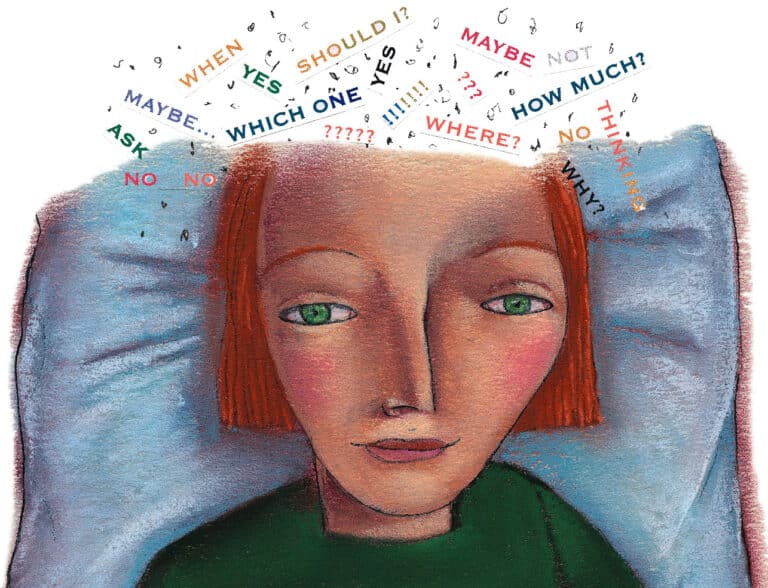
Self-doubt doesn’t show up like a big dramatic problem.
It shows up quietly.
You’re doing your work. Studying. Preparing. Trying.
And suddenly there’s this thought:
“Am I actually good enough for this?”
“What if I mess this up?”
“Everyone else seems to be moving ahead… why am I stuck?”
You don’t even know where that thought came from.
But once it’s there, it doesn’t leave easily.
And the worst part?
From the outside, everything looks fine.
From the inside, you feel unsure, heavy, second-guessing yourself all the time.
If this sounds familiar, nothing is “wrong” with you.
You’re just human.
Why Self-Doubt Shows Up So Often
Most people think self-doubt means low confidence.
Not true.
Self-doubt usually shows up when:
- you care
- you’re trying to do better
- you’re stepping into something new
Sometimes it comes from old stuff.
Being criticised too much. Being compared. Being told you’re “not enough” at some point.
Sometimes it comes from pressure.
Pressure to succeed. Pressure to not waste time. Pressure to get things right.
And sometimes, it’s just exhaustion pretending to be doubt.
When Even Success Feels Fake
This is where imposter syndrome sneaks in.
You do well… but you don’t feel like you deserve it.
You think you just got lucky.
You think someone will eventually “figure you out”.
Here’s the irony:
People who don’t care rarely feel like imposters.
The ones who feel like frauds are usually the ones who are actually trying.
You’re Way Harder on Yourself Than You Realise
Try this for a second.
If your friend said:
“I feel like I’m not good enough”
Would you say:
“Yeah, you’re right. You’re failing.”
Of course not.
But that’s exactly how most of us talk to ourselves.
Being kinder to yourself doesn’t mean becoming lazy.
It just means not beating yourself up for learning in real time.
Growth is messy. Always has been.
You’ve Done Hard Things Before (Even If You Forget Them)
Your brain has a bad habit.
It remembers mistakes very clearly.
It forgets everything you survived.
Exams you thought you’d fail.
Situations you felt unprepared for.
Moments you figured out slowly.
You didn’t magically become incapable overnight.
Comparison Will Destroy Your Confidence Faster Than Failure
Comparing your real life to someone else’s highlight reel will mess with your head.
You don’t see their doubts.
You don’t see their bad days.
You don’t see how long it took them to get there.
Everyone’s journey looks clean from a distance.
Yours looks messy because you’re living it.
Pay Attention to the Voice in Your Head
That voice saying:
“I can’t do this”
“I’m not ready”
“I’ll probably fail”
Pause for a second.
Ask:
Is this a fact?
Or is this just fear talking?
You don’t need to suddenly think positive.
Even saying, “I’m still figuring it out” is enough.
Stop Carrying Everything Alone
Self-doubt gets louder in isolation.
When you’re alone too much, every thought echoes.
Talk to people who ground you.
People who remind you who you are without preaching.
Sometimes you don’t need advice.
You just need to not be alone with your thoughts.
Confidence Usually Comes After You Start
Waiting to feel confident before acting is a trap.
Most people act first.
Confidence follows later.
You don’t need certainty.
You just need to begin.
Environment Matters More Than Motivation
This is the part people ignore.
When you’re alone, unstructured, and overthinking, self-doubt grows faster.
This is why something like The Reading Room (An Initiative by The CA in Me) helps quietly.
To join The Reading Room (Virtual Library)
It’s a calm online space where people sit and work together.
Cameras on. Mics off. Timed sessions.
No talking.
No comparison.
No pressure to perform.
And something shifts.
You stop overthinking.
You stop judging yourself.
You just sit and work.
Not because you suddenly became confident.
But because the environment stopped fighting you.
Sometimes clarity doesn’t come from thinking harder.
It comes from showing up in the right space, letting the noise settle, and giving yourself permission to move forward – slowly, steadily, like a real human being.
And that’s usually enough.